Do I Need to Provide Water or Electricity for a Mobile Valet?
No. A genuinely mobile valeting service brings everything it needs on the van, water, power, and all. If a company asks to plug into your socket or run a hose from your outside tap, that’s usually a sign they’re not set up the way “mobile” implies.
This matters more than it sounds. Plenty of people delay booking because they assume they’ll need to sort out access to their outside tap or leave a window open for an extension lead. Neither is necessary with a properly equipped operator.
The Short Answer: No, You Don’t Need to Supply Either
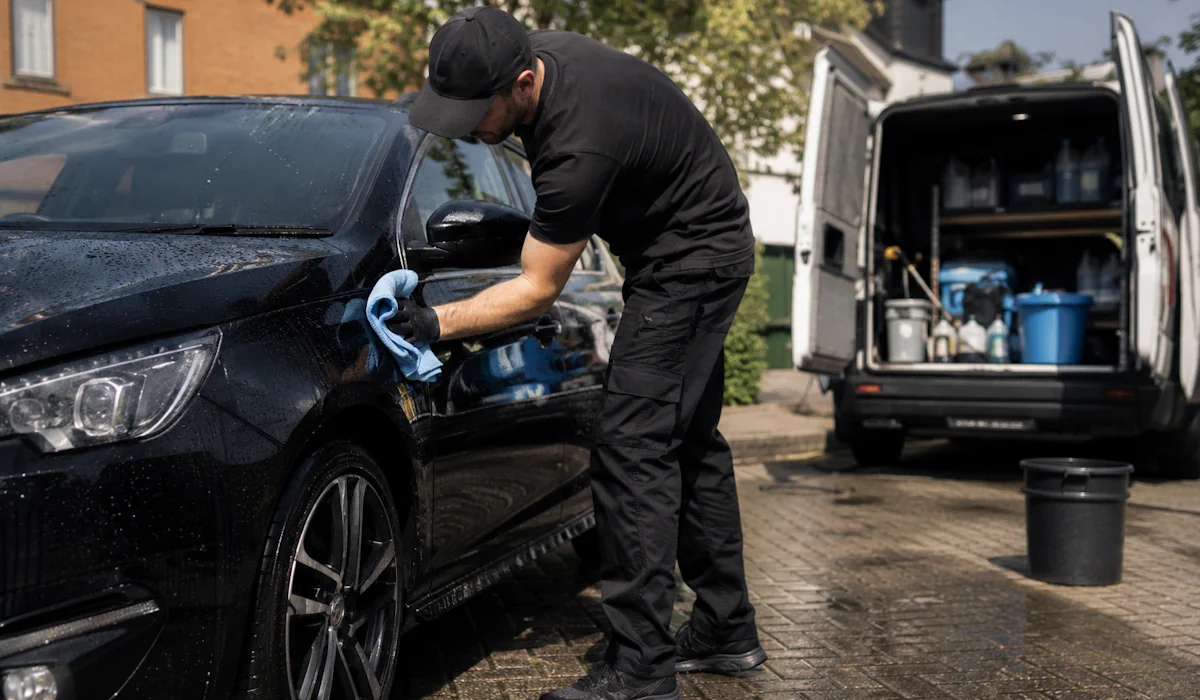
A fully mobile valet carries its own water supply in tanks fitted to the van, along with a generator or leisure battery setup that powers the pressure washer, vacuum, and any other equipment needed for the job. Nothing connects to your property at any point.
That’s the whole point of the word “mobile” in mobile valeting. If a service still needs your tap and electricity to function, it’s not really independent of your property; it’s just a valeter working on your driveway using your utilities.
How a Mobile Valeter Brings Their Own Water
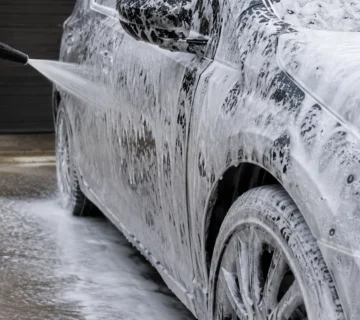
Water tanks mounted on the van hold enough water for a full day of bookings, topped up between jobs from a legitimate water source rather than your garden tap. That water feeds a pressure washer directly, giving full wash pressure without a hosepipe ever touching your property’s supply.
This setup also means the job can happen almost anywhere. A driveway, a car park, an office car park during the working day, none of these locations typically have an accessible outside tap, so a self-contained water supply is what makes valeting at your workplace or a public car park possible in the first place.
How a Mobile Valeter Brings Their Own Power
Pressure washers, wet and dry vacuums, and polishing machines all need power, and a properly equipped van carries a generator or a leisure battery bank sized for a full day’s work. Neither option depends on finding a plug socket or an extension lead reaching out through a letterbox.
Generators run louder than people expect, so a considerate valeter uses one designed to keep noise down, particularly for early morning or residential bookings. Battery-powered setups run near-silent, which is why many detailers have shifted toward them for kits that don’t need the raw output a generator provides.
Why Self-Sufficient Equipment Matters
Bringing everything on the van isn’t just a matter of convenience. It removes several headaches that would otherwise land on you as the customer. There’s no separate cost for water or electricity. There’s no risk of a temporary use ban affecting your booking, since the water never comes from your mains supply. There’s no extension lead trailing across a wet driveway, and no argument later about who runs an appliance on whose electricity bill.
It also means the valeter isn’t limited to properties with an accessible outside tap and a nearby socket. Flats, terraced houses with no side access, and workplaces with shared car parks all become straightforward to service when nothing depends on what’s already on site.
What You Should Prepare Instead
Since water and power aren’t your responsibility, focus on the things that help the job run smoothly. Clear personal items and valuables out of the car beforehand, since a valeter shouldn’t be sorting through your belongings while cleaning.
Make sure there’s enough space around the vehicle to walk right around it comfortably, ideally with the car parked somewhere flat rather than on a steep slope. Fold in wing mirrors if space is tight, and let the valeter know about any existing damage or particularly delicate trim before they start, so nothing gets missed or misunderstood.
If pets or children are likely to be around, keep them clear of the immediate work area while pressure washing and vacuuming equipment are running. It’s a safety point rather than a fussy request, since hoses, cables, and moving equipment aren’t ideal territory for curious toddlers or over-excited dogs.
Where This Makes Mobile Valeting Possible
Self-contained equipment is also why mobile valeting keeps running normally even when a temporary use ban is in force locally. Since the water never touches your outside tap, the restrictions that apply to hosepipes connected to the mains don’t come into play. That’s a detail worth knowing if you’ve ever hesitated to book during a dry summer, assuming a hosepipe ban meant no valeting at all.
What About Larger Jobs Like Ceramic Coating?
Bigger jobs, including machine polishing and ceramic coating, still run entirely off the van’s own water and power supply, even though they take considerably longer than a standard wash. The only extra requirement is space and time, since correction work and coating application need room to work around the car properly and a stretch of hours where the vehicle can sit undisturbed.
Booking With Confidence
There’s nothing for you to organise beyond clearing the car and giving reasonable access. Get in touch with WL Mobile Valeting – every job runs entirely on water and power carried in on the van, with nothing needed from your home or workplace beyond the space to park and work.