What Is Snow Foam and Does It Actually Work?
Snow foam looks brilliant on camera. A car buried under thick white foam, dripping down the bodywork in slow motion, racks up millions of views on detailing videos every year. But does it actually do anything useful, or is it just a satisfying social media show?
The short answer is that proper snow foam does a genuine job, but only when it’s used correctly and for the right reason. Here’s what it actually does, how it works, and where people get it wrong.
What Snow Foam Actually Is
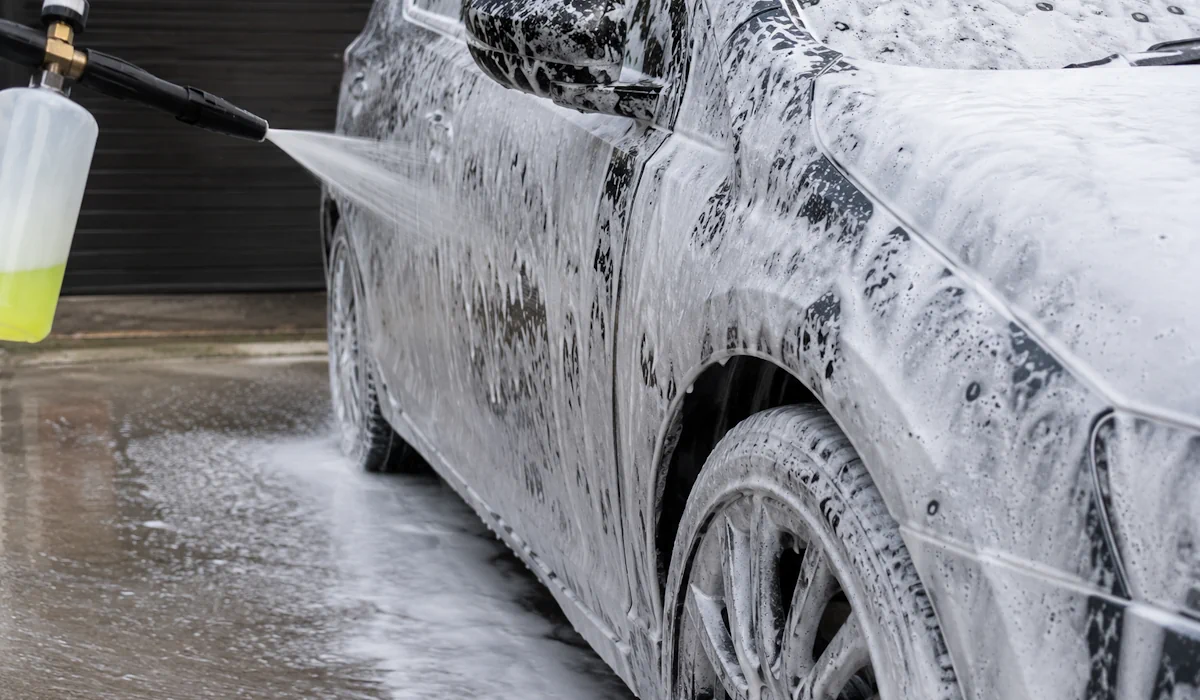
Snow foam is a thick, clinging foam applied to a car before any physical washing. It’s sprayed on through a foam lance or cannon connected to a pressure washer, using a diluted chemical concentrate designed to cling to vertical panels rather than sliding straight off.
The point isn’t decoration. Snow foam is a pre-wash step, designed to loosen and lift dirt, road grime, and traffic film before a sponge or mitt ever touches the paint. That distinction matters more than most people realise.
How Snow Foam Works on Your Paintwork
Dirt sitting on a car’s surface isn’t just loose dust. It’s often bonded lightly to the clear coat through oils, traffic film, and dried mud, and dragging a wash mitt straight across that surface grinds those particles into the paint like sandpaper. That’s how swirl marks and fine scratches build up over months of regular washing.
Snow foam breaks that bond chemically before any contact happens. The foam clings to the surface for several minutes, softening dirt and grime so it lifts away when rinsed off, rather than sitting there waiting to be scrubbed. By the time you pick up a wash mitt, a large percentage of the loose contamination has already gone, along with a fair chunk of the risk that comes with physical washing.
Does It Actually Prevent Scratches?
Not entirely, but it reduces the risk considerably. No pre-wash step removes every particle of grit from a car’s surface, and a wash mitt still makes direct contact with the paint at some point. Foam cuts down how much abrasive material is left for that mitt to drag across.
Think of it as reducing the ammunition rather than eliminating the gun. A car that’s been properly snow foamed before washing picks up noticeably fewer fine scratches over time compared to one that goes straight from hose to mitt with no pre-wash stage at all.
Snow Foam vs Regular Pre-Wash Sprays
Basic pre-wash sprays and snow foam aim for the same result but work differently. A spray-on pre-wash gets applied thin and rinsed quickly, giving contaminants only a short window to loosen. Snow foam clings to the surface for far longer, often five minutes or more, giving the chemicals inside real time to break down grime rather than just wetting it.
That extended dwell time is the actual advantage. A thicker, longer-lasting foam does more of the heavy lifting before you ever pick up a sponge, which is exactly why detailers rate it above a quick pre-wash spray for cars that see regular road use.
Do You Need a Snow Foam Cannon?
Yes, if you want the proper effect. A snow foam cannon or lance mixes concentrated shampoo with air and water under pressure, creating the thick, clinging foam that makes the whole process work. Without a cannon, you’re just applying diluted soap with a bucket, which behaves nothing like real snow foam and clings for a fraction of the time.
A decent cannon and a pressure washer cost more than a bucket and sponge, which is part of why plenty of home washers skip the step entirely. It’s also why mobile detailers use it as standard, since the equipment and product cost is built into a proper wash rather than an optional extra.
Common Snow Foam Mistakes
Rinsing too early kills most of the benefit. Snow foam needs time to work on the grime before it gets washed away, and hosing it off within thirty seconds does more than a quick spray would.
Using the wrong dilution ratio causes problems too. Too weak, and the foam thins out and slides off before it’s done anything. Too strong, and it can strip existing wax or sealant off the paint, which isn’t ideal if you’ve paid for protection you actually want to keep.
Applying it in direct sunlight or on a hot bonnet dries the foam out before it’s had time to work, which wastes product and undoes most of the benefit.
Is Snow Foam Worth Bothering With?
For anyone who washes their own car regularly, yes, it’s one of the cheapest ways to reduce swirl marks and keep paint looking sharper for longer. The equipment cost pays for itself over a handful of washes once you factor in the reduced risk to your paintwork.
For anyone who’d rather not deal with cannons, dilution ratios, or pressure washers, having it done properly as part of a full valet solves the same problem without the faff. It’s included as standard in a proper exterior wash rather than treated as an upsell.
Getting a Proper Snow Foam Wash
A correctly applied snow foam stage sets up everything else in a wash, from the two-bucket method to the final rinse. Skip it, and you’re relying on physical contact alone to shift dirt that could have been lifted chemically first.
Get in touch with WL Mobile Valeting if you want your car washed properly from the very first stage, with snow foam and full decontamination built into every valet package rather than bolted on as an afterthought.