What Is a Hydrophobic Glass Coating and Is It Worth It?
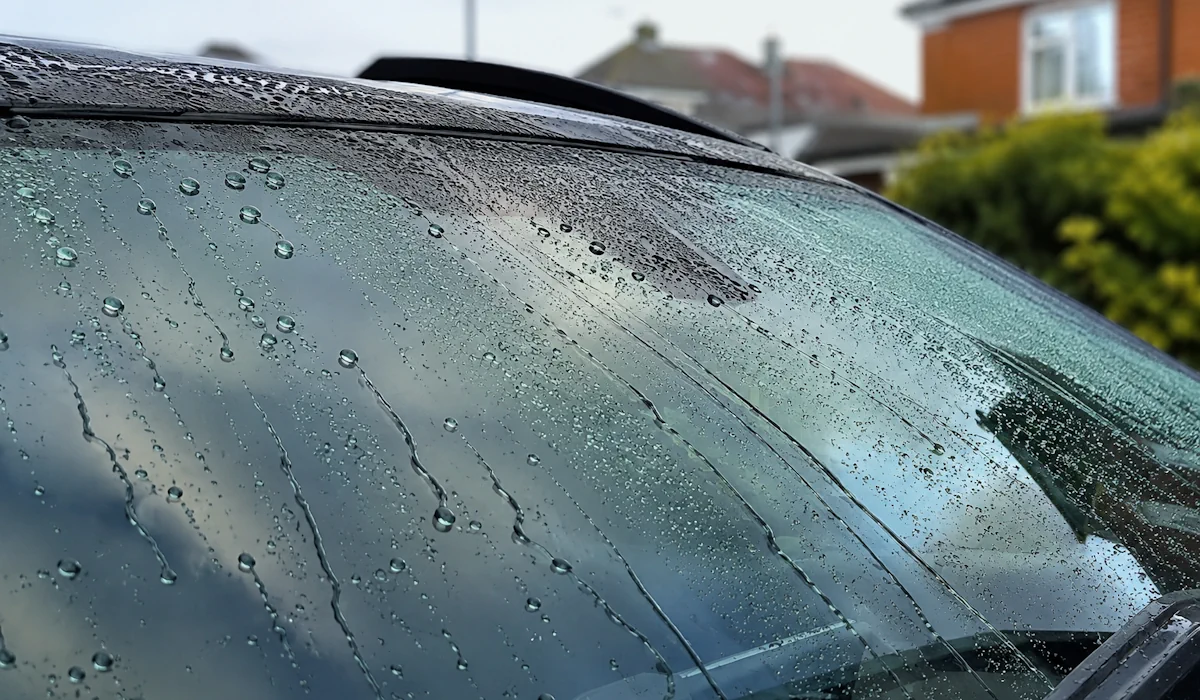
Rain hits your windscreen, and instead of smearing across the glass, it beads up and rolls straight off. That’s a hydrophobic glass coating doing its job. It’s one of the simplest upgrades you can make to a car, yet most drivers have never had it applied and don’t fully understand what it does or why it matters.
This guide covers what a hydrophobic glass coating actually is, how it works, where it makes the biggest difference, and whether it’s genuinely worth paying for.
What a Hydrophobic Glass Coating Actually Does
A hydrophobic glass coating is a thin chemical layer, usually silica- or fluoropolymer-based, that bonds to the glass surface. Once cured, it changes how water behaves on that surface. Instead of spreading into a flat sheet, water forms tight beads that roll off with almost no resistance, taking dirt, road grime, and salt spray with it.
The effect isn’t cosmetic. It’s physics. Untreated glass has a naturally high surface energy, which lets water spread out and cling. A hydrophobic coating lowers that surface energy so water can’t grip the glass properly. Add wind pressure or forward motion from driving, and beaded water lifts off rather than smearing.
How the Coating Works on a Molecular Level
Glass coatings bond at a chemical level rather than sitting on top like a wax or a polish. The coating fills microscopic pores in the glass and forms covalent bonds with the silica already present in the surface. That bond is what makes it durable rather than something that washes off after a couple of rainy drives.
Most professional-grade coatings cure through a combination of time and heat, which is why detailers often use infrared lamps or ask you to leave the car undisturbed for several hours after application. Rush that curing stage and the coating never reaches full hardness, so it wears away far faster than it should.
Where a Hydrophobic Coating Makes the Biggest Difference
The windscreen benefits the most, since it’s the surface you rely on for visibility in wet weather. A properly coated windscreen sheds rain at speeds as low as 30mph without needing the wipers on full speed, which genuinely improves how much you can see during heavy downpours.
Side windows and mirrors benefit too, particularly for anyone who drives motorways regularly. Spray thrown up by lorries clears faster, and mirrors stay usable in conditions where uncoated glass turns into a blur.
Rear windows matter less for most drivers unless you tow or reverse frequently in wet weather, in which case the same clarity benefits apply.
Hydrophobic Coating vs Rain Repellent Sprays
Supermarket rain repellent sprays and proper hydrophobic coatings sound similar but behave very differently. Sprays sit on the surface rather than bonding to it, so they wash away within a few weeks, sometimes after a single trip through a car wash.
A professionally applied glass coating lasts considerably longer, typically between six months and two years depending on the product used and how often the car goes through automatic washes with harsh detergents. The upfront cost is higher than a £6 bottle of spray, but you’re not reapplying it every fortnight, and the beading performance stays consistent rather than fading gradually as a spray does.
How Long a Glass Coating Actually Lasts
Durability depends on three things: the quality of the coating used, how well the glass was prepped beforehand, and how the car gets washed afterwards. Coatings applied over glass with old wax residue or mineral deposits bond poorly and fail early, regardless of how good the product is.
Frequent trips through automatic car washes with caustic detergents strip coatings faster than hand washing with a pH-neutral shampoo. If you want a coating to last close to its full potential, gentle washing habits matter as much as the coating itself.
Is It Worth the Money?
For anyone who drives regularly in the rain, yes, and the improvement in visibility alone justifies it. Being able to see clearly at 50mph in heavy rain without straining against wiper smear is a genuine safety benefit, not just a nice-to-have.
For a car that mostly sits in a garage or does short dry-weather journeys, the benefit is smaller, though the reduced need to scrub bird droppings and bug splatter off the glass still saves time on every wash.
Cost-wise, it makes the most sense as an add-on rather than a standalone treatment. Many detailers include glass coating alongside a full ceramic coating package, since the glass gets properly decontaminated and prepped as part of that process anyway, which keeps the extra cost low compared to booking it separately.
Getting It Done Properly
Correct application matters more with glass coatings than almost any other detailing product, since poor prep is the single biggest reason coatings fail early. The glass needs full decontamination, any embedded contaminants removed with a clay bar, and a completely oil-free surface before the coating goes anywhere near it.
Get in touch with WL Mobile Valeting if you want a hydrophobic glass coating applied properly, either on its own or alongside a full paint protection package. A quick chat about your car and how you drive it is enough to work out what will actually last.