How Can Using the Wrong Cloths Damage Your Car’s Paint?
Using the wrong cloths when cleaning a car causes scratches, dulls the paint, and leaves lasting damage. Many drivers unknowingly use materials that trap dirt, drag grit across the surface, and wear down the clear coat and protective layers. What seems like a harmless wipe-down often leads to swirl marks, fine scratches, and long-term fading.
Micro-scratches from Rough or Dirty Cloths
Many household cloths contain rough fibres that scrape the surface instead of gliding smoothly over the paint. Old towels, standard cotton rags, and synthetic fabrics hold dust, tiny grit particles, and debris. When wiped over the paint, these act like sandpaper, leaving behind micro-scratches.
The damage isn’t always visible at first. Over time, repeated use of rough cloths creates dull patches and uneven textures. It is most noticeable under bright light, where swirl marks form circular patterns across the surface. Once these appear, they require professional polishing to remove.
Using Sponges or Non-Microfibre Cloths
Sponges seem like a good option for washing a car, but they are one of the worst tools for paintwork. The large pores in a sponge trap grit and dirt. When pressed against the vehicle, they grind these particles into the paint. Instead of removing contaminants safely, a sponge drags them across the surface, causing tiny scratches with every wipe.
Non-microfibre cloths have a similar problem. Standard cotton cloths don’t lift dirt effectively. Instead, they push it around, increasing friction. It creates fine abrasions that break down the glossy finish, making the car look worn and aged faster.
Damage from Paper Towels and Worn-Out Rags
Many drivers use paper towels or old t-shirts for quick touch-ups, but these materials are too abrasive for car paint. Paper towels contain rough fibres designed for absorption, not for delicate surfaces. Even a single use can leave fine lines or a hazy appearance.
Old rags may feel soft, but they often contain hardened detergent residues. These scratch the clear coat, reducing shine and making the surface more vulnerable to fading and oxidation.
Dry Wiping Increases Surface Damage
Wiping a car’s paint while dry is one of the fastest ways to cause visible scratches. When dust, sand, or fine dirt is on the surface, a dry cloth grinds these particles into the paint. It leads to swirls, scuff marks, and a rough texture.
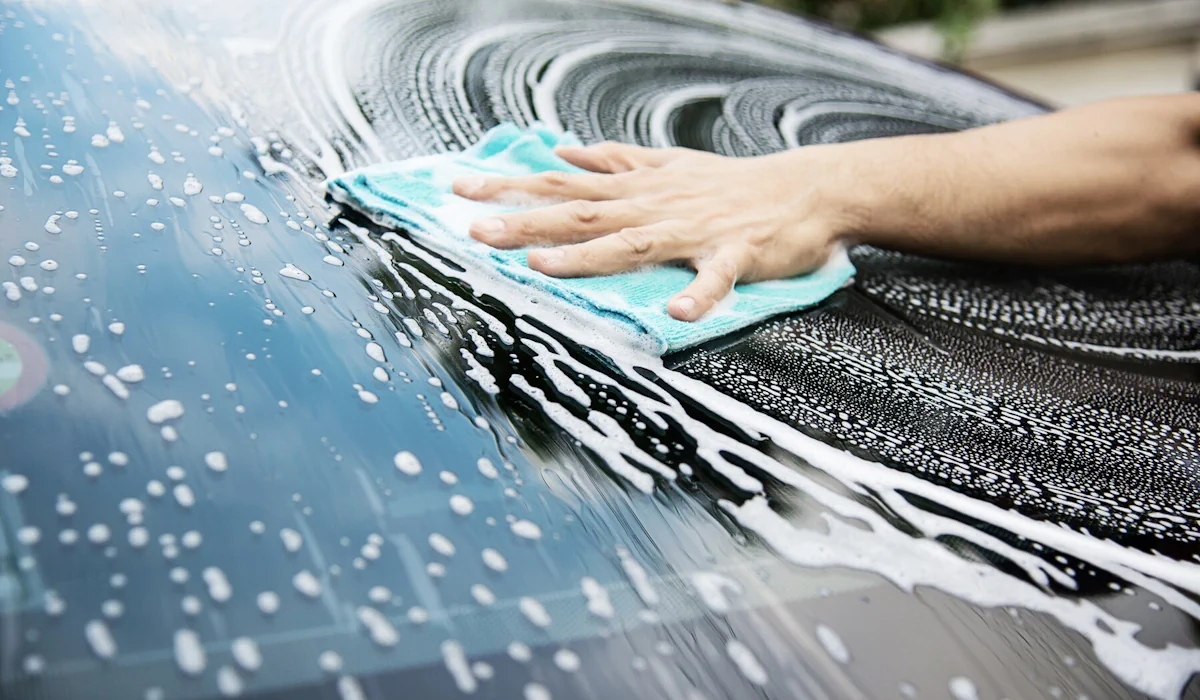
Always use a damp microfibre cloth to trap and lift dirt away safely. Pairing it with a proper lubricant, such as a quick detailer spray or waterless wash solution, further reduces friction and surface damage.
Faded and Worn Paint from Overuse of Cheap Cloths
Low-quality cloths don’t distribute pressure evenly. It causes patchy cleaning, with some areas receiving too much friction. Over time, the uneven wear creates a faded appearance, making the paint look older.
Using the wrong cloths also removes protective coatings applied during waxing or polishing. Without this barrier, the paint becomes more vulnerable to sun exposure, oxidation, and chemical stains.
How to Choose the Right Cloth for Car Care
To avoid damaging paintwork, always use soft, high-quality microfibre cloths. These cloths have split fibres that trap and lift dirt safely without scratching the surface. A good microfibre cloth should have a deep pile, allowing contaminants to be absorbed into the fibres instead of rubbing against the paint.
Key tips for safe cleaning:
- Use separate microfibre cloths for washing, drying, and polishing.
- Wash cloths regularly to prevent dirt build-up that could cause scratches.
- Never use fabric softeners, as they reduce the cloth’s ability to lift dirt safely.
- Replace cloths when they become stiff or worn out, as hardened fibres create fine scratches.
Final Thoughts
Using the wrong cloths causes visible damage that builds up over time. Scratches, swirl marks, faded patches, and uneven wear come from poor-quality materials or improper cleaning techniques. Choosing the correct cloths and handling them properly keeps your car’s paintwork glossy, smooth, and well-maintained for years.