The Impact of Road Salt & Grit on Your Car – And How Mobile Valeting Protects You
During winter, the mix of road salt and grit keeps the roads safer but quietly destroys vehicles. Beneath the shiny finish, corrosion begins the moment salty water gets to the metal. It creeps under paint, attacks bolts, and weakens the bodywork. Many drivers ignore it until the first signs appear, bubbling paint, rusty arches, dull alloys, or a white residue on panels. By then, the damage is already done.
Why Road Salt Damages Your Car
Road salt, usually sodium chloride, lowers the freezing point of water. When spread across icy roads, it melts snow and prevents refreezing. But this same chemical reacts with iron and steel. It produces rust through oxidation. Add moisture, oxygen, and friction, and the reaction speeds up.
Tiny stone chips, scratches, or gaps under trim allow saltwater to seep in. The moment metal is exposed, corrosion begins. Even vehicles with paint protection are vulnerable when the coating weakens or wears off. Once rust starts, it spreads beneath the surface, unseen until flaking paint or brown streaks appear.
Grit compounds the problem. The small stones mixed with salt grind against panels, wheels, and sills, scratching clear coat and exposing bare metal. Every drive through salted roads means more abrasion, more exposure, and more corrosion.
The Hidden Areas Most Affected
The most serious damage often occurs where you can’t see. Undercarriages, wheel arches, brake lines, and suspension components bear the brunt. Salt-laden spray from the tyres coats these parts and lingers for weeks if not washed off properly.
- Wheel arches collect mud and salt that hold moisture.
- Brake callipers and discs suffer corrosion, affecting performance.
- Exhaust systems weaken where salty condensation gathers.
- Underside bolts and brackets rust solid, making future repairs costly.
Even modern cars with factory undersealing suffer once the protective layer cracks or peels. Left untreated, corrosion travels fast, especially in winter’s constant freeze-thaw cycles.
Visible Signs of Salt and Grit Damage
Several early indicators show when your car is suffering from salt exposure.
- White powdery film on the lower panels and doors.
- Rough, gritty texture on the paint when running a hand across it.
- Rust rings or streaks around wheel arches and door edges.
- Faded alloys or pitted wheel surfaces.
- Sticky door seals from salt crystals collecting along rubber edges.
Ignoring these signs shortens your vehicle’s lifespan and reduces resale value. Salt corrosion doesn’t stop once it begins. It spreads beneath the surface, turning small marks into deep blisters.
How Mobile Valeting Stops the Damage
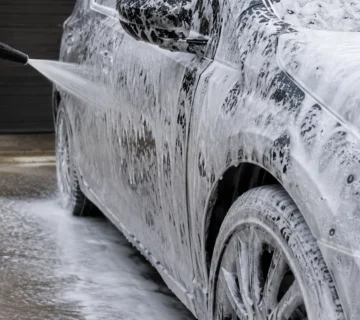
A professional mobile valet doesn’t just wash off the dirt; it targets and neutralises the chemicals causing damage. With the right products, pressure, and technique, your vehicle gets a deep clean that protects rather than harms.
- Underbody Rinse
High-pressure jets reach the underside, removing salt, mud, and grit from joints, wheel wells, and chassis sections. This step prevents build-up in hidden corners that ordinary car washes miss. - pH-Balanced Shampoo
Professional valeters use pH-neutral cleaners that lift salt deposits without stripping wax or sealant. Household detergents destroy paint protection, while these solutions preserve it. - Wheel and Tyre Treatment
Specialised alloy cleaners break down brake dust and salt crust. A soft brush reaches behind spokes and into bolts. Once cleaned, applying a wheel sealant prevents new deposits from bonding to the surface. - Protective Wax or Sealant Application
After cleaning, the vehicle receives a coat of wax or ceramic sealant. This forms a barrier against salt and moisture, making future washes easier and more effective. - Detailed Drying and Finishing
Drying the car fully stops water from freezing in crevices. Professional microfibre towels prevent scratches and ensure no streaks or residue remain.
Each of these steps works together to halt corrosion and maintain the car’s finish throughout the harsh months.
Why Regular Cleaning Matters
Salt works fast. One drive through wet, salted roads can coat every surface in a thin chemical film. Leaving it for even a few days lets corrosion begin. Regular mobile valeting every two to three weeks prevents this cycle. By keeping surfaces clean and protected, you stop salt.
Mobile valeting also brings convenience. You don’t need to queue at a car wash or risk freezing hoses at home. Professionals arrive with warm water systems. They use safe products and full protection methods, whatever the weather.
A consistent cleaning routine keeps mechanical parts moving freely, maintains appearance, and protects your investment. Clean vehicles are easier to maintain and far less prone to long-term damage.
Protect Your Car Before the Damage Starts
Salt and grit are necessary for safe roads, but they’re brutal on vehicles. Every winter, countless cars lose their shine, value, and structure. Once corrosion sets in, repairs can run into hundreds, sometimes thousands, of pounds.
Prevent it with regular mobile valeting that reaches every corner, including the parts you can’t see. A well-maintained car resists salt, stands up to bad weather, and stays looking newer for longer.
Book a professional winter valet now, and stop salt damage before it starts. Clean paint, clear wheels, and a protected undercarriage will see you safely through the cold months, while your car stays strong, spotless, and ready for the road ahead.